Template-based printing of a single form
Document rendering from a prepared template with a predictable result and no manual data transformations on the development side.

A standalone service for generating print forms within an enterprise architecture. Developers pass only the data, analysts control the output through templates and meta-functions, while the business gets a predictable result without a long cycle of rework.
The service is built as an independent integration module: it accepts data, applies display logic through templates, and delivers the result in the format required by the business process, not by the specific source system.
Document rendering from a prepared template with a predictable result and no manual data transformations on the development side.
The service generates multiple print forms in a single request and processes them as a unified output scenario.
Results can be packaged into an archive, merged into a single PDF file, or assembled into an Excel workbook with separate sheets for the set of forms.
Merging can be configured either for the entire set of print forms or for individual groups, depending on the scenario's business logic.
The service works with office formats for print forms and can deliver final documents in the form required for corporate processes.
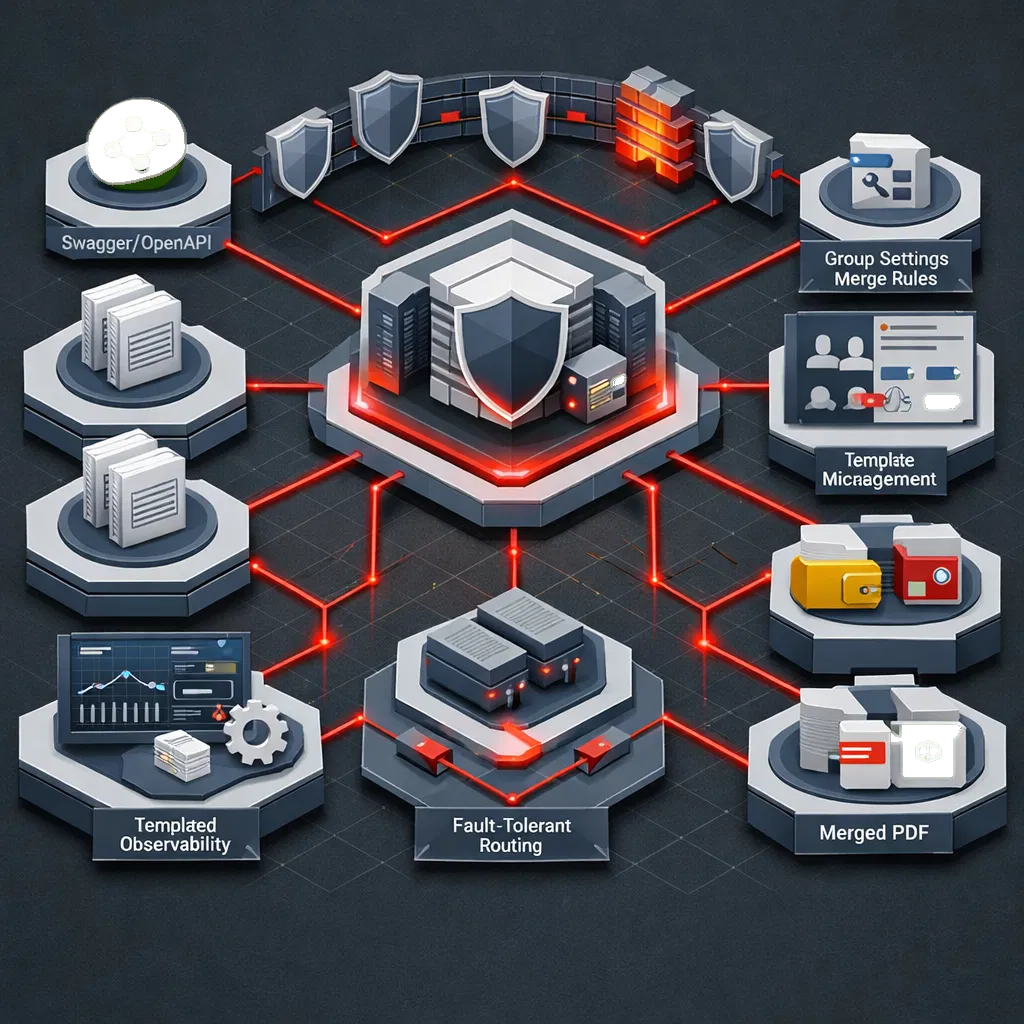
For embedding into the corporate environment, a clear API contract and Swagger are provided to speed up system integration and onboarding.
The key principle: developers don't transform data to fit the document. They only provide the data for printing. Analysts use it and transform it for output inside the template itself, through meta-functions. As a result, a change in the input format doesn't break business expectations: the system keeps producing the correct final result.
Pass the service only the raw data for printing, without additional transformation and without manual formatting logic for the template.
Take on preparing the display in the print form using meta-functions and templates, allowing them to roll out changes faster without constant involvement from development.
Get a controlled printing result, a predictable change lifecycle, and fewer risks when the input data format changes.
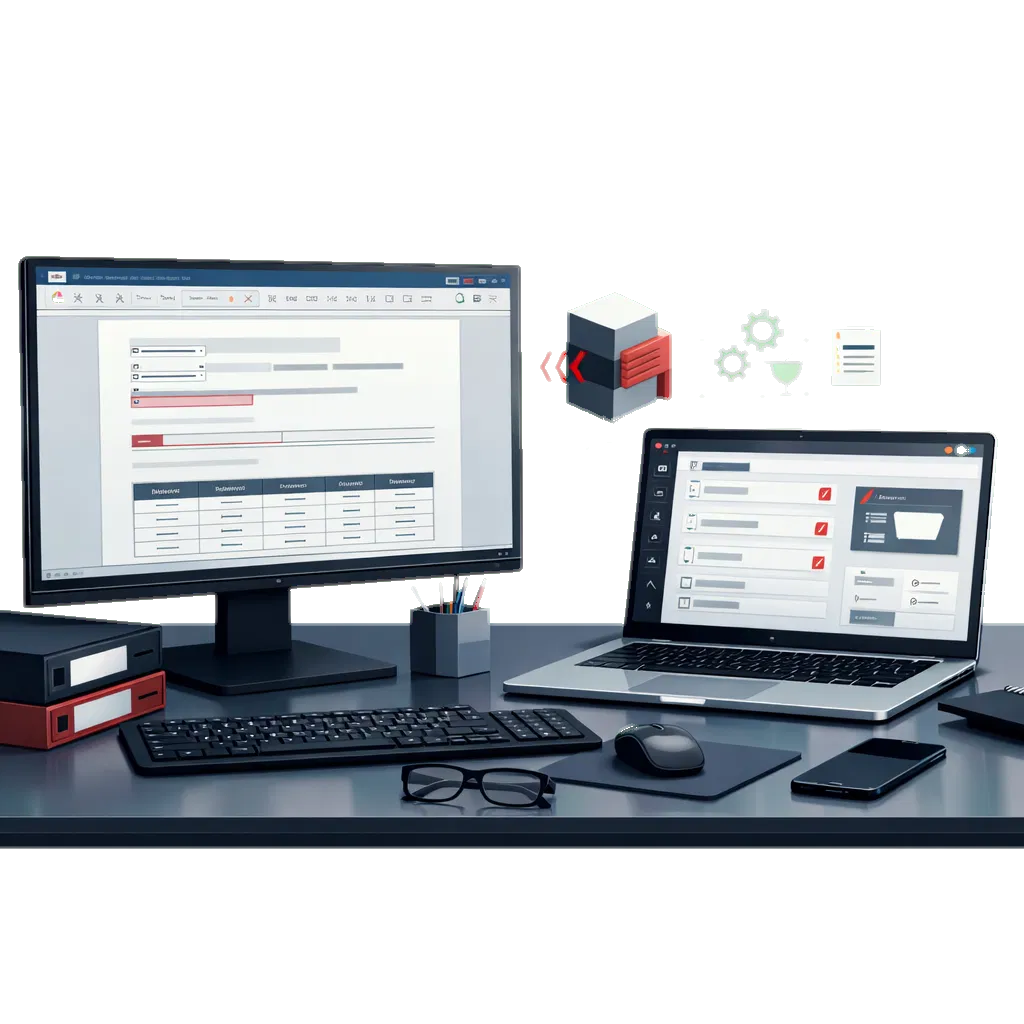
The print service is not just a runtime module — it's also a working environment. The web interface and Word add-in make it possible to prepare, verify, and release templates with fewer round trips back to development.
Allows you to create and configure system entities, assemble the necessary print elements, and manage templates within a single environment.
Analysts can test print form templates in advance, catch errors before changes go live, and shorten the approval cycle.
The Microsoft Word extension helps lay out templates, run them against test data, and bring print forms to production readiness faster.
According to our research, moving print form preparation logic into a managed service environment reduces time to release, decreases the number of production issues, and frees up developer time for core tasks.
Reduction in task delivery time
Decrease in average time to release changes
Increase in developer throughput
Reduction in critical issues and bugs after production release

The service is designed as an enterprise-ready component: it can be embedded into existing integration buses, observability, security environments, and infrastructure processes without artificial simplifications.
Watch our team's conference talk, where we go into detail about the capabilities and architecture of the print service.
The print service is delivered in three formats, depending on the scale of the task and infrastructure requirements. You can start with a library for embedding into your existing stack, deploy a ready-made microservice with an API interface, or get a full fault-tolerant cluster for high-load corporate environments. Every delivery option includes documentation, an integration contract, and support during implementation.
A ready-made set of components for embedding into an existing application. Suitable for teams that want to manage document generation directly from their own code without deploying separate infrastructure.
A standalone service with a REST API and Swagger contract, ready to deploy in the corporate environment. Provides a full separation of responsibilities between development and analytics teams without changing the existing architecture.
A fault-tolerant cluster solution for high-load environments with horizontal scaling, load balancing, and support for corporate availability and performance requirements.